



How to Choose a Women's Rain Jacket
A women's rain jacket should be chosen from the wearer's measurements, layering and movement rather than a generic gender ranking. Women's-specific patterns can change shoulder, waist, hip, sleeve and overall proportions, but individual fit still varies by brand and model.
Start with measurements and layers
Use the current size chart, then try the jacket over the base, mid and insulated layers planned for the trip. Check shoulder movement, chest and hip room, sleeve length and hem coverage without assuming the normal casual size will transfer.
Test movement and pack interaction
Reach overhead and forward, bend, rotate and wear a loaded pack. Confirm that the hem does not rise excessively, cuffs remain adjustable and pack straps do not make zips or pockets unusable.
Choose construction for the activity
Compare 2-, 2.5- and 3-layer constructions, face-fabric durability, total weight and packed volume. A light backup shell may suit occasional use; regular pack wear and rough conditions may justify a more robust face fabric.
Check hood and ventilation
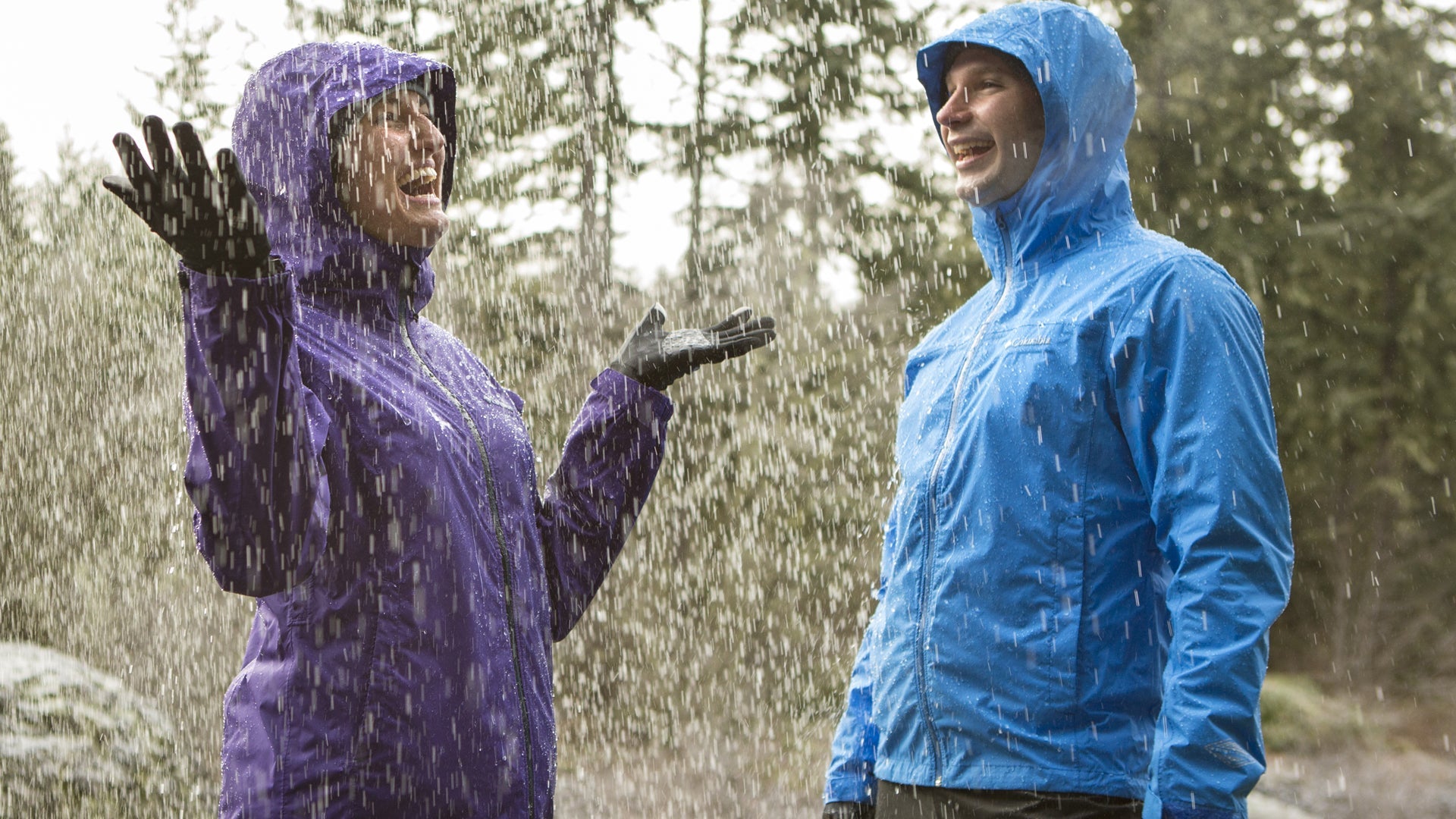
Adjust the hood for visibility and headwear, then move the head in both directions. Review pit zips or other ventilation, main-zip operation, storm protection and whether the garment can be vented without exposing important layers.
Look beyond the label
Waterproof and breathability figures need comparable test methods. Fit, seam sealing, zips, hood, face-fabric wetting and care all affect practical use. No membrane prevents perspiration or condensation.
Choose by the wearer's priorities
List the non-negotiables: layer room, pack compatibility, hood, length, pockets, weight, colour visibility and budget. If a men's or unisex model fits better and meets the requirements, the category label should not override the actual fit.
Browse the current rain jacket range, filter for relevant sizing and compare the exact garment measurements and construction.