
Rain Jackets NZ — The Complete Buying Guide
Rain Jackets NZ: The Complete Buying Guide
New Zealand weather doesn't negotiate. A clear Fiordland morning can become a horizontal-rain afternoon inside an hour, and a Tongariro crossing that starts sunny often ends in a wet slog. A quality waterproof rain jacket isn't optional kit for tramping in NZ — it's foundational. The challenge is wading through the jargon: hydrostatic head ratings, breathability figures, membrane technologies, and seam-sealing grades. This guide cuts through all of it so you can find the right jacket for your style of travel, your budget, and NZ's particular brand of wet.
Browse the full range at rain jackets at Dwights or keep reading for everything you need to know before you buy.
Understanding Waterproofing: What the Numbers Actually Mean
Waterproofing is expressed as a hydrostatic head (HH) rating in millimetres. The test involves placing a column of water above the fabric and measuring how much pressure the fabric can withstand before water passes through. The higher the number, the more waterproof the jacket.
- 5,000–10,000mm HH: Suitable for light rain and casual use. Fine for a short walk in a shower, but not reliable in sustained rain or wind.
- 10,000–15,000mm HH: A reasonable entry point for day walks on well-formed tracks. Not enough for serious backcountry tramping.
- 20,000mm HH and above: Where you want to be for multi-day tramping, alpine terrain, and NZ's high-rainfall regions. Jackets at this level use premium membranes and will cope with prolonged downpours.
It's worth noting that HH rating alone doesn't tell the whole story. Seam construction and DWR coating matter just as much in the field — a jacket rated at 28,000mm with unsealed seams will still let water in at the shoulders.
Breathability: Staying Dry From the Inside Out
A waterproof jacket that traps all your body heat and sweat is almost worse than no jacket at all — you end up soaked in perspiration instead of rain. Breathability is measured in grams of moisture vapour per square metre per 24 hours (g/m²/24hr), sometimes written as MVTR (Moisture Vapour Transmission Rate).
- Under 10,000 g/m²/24hr: Low breathability. You'll feel clammy during any aerobic activity. Suited to low-intensity use or emergency-only shells.
- 10,000–20,000 g/m²/24hr: Mid-range breathability. Acceptable for moderate tramping pace on cool days.
- 20,000+ g/m²/24hr: High breathability. The range to aim for if you're moving fast, climbing hard, or tramping in warm, humid NZ summers.
Breathability figures assume a humidity differential between inside and outside the jacket. In warm, humid NZ conditions (think Northland or the West Coast in summer), even high-rated membranes work less efficiently. Pit zips — underarm ventilation zips — offer a useful mechanical backup when the membrane alone isn't keeping up.
Seam Sealing: The Detail That Makes or Breaks a Jacket
Every time a sewing machine needle passes through waterproof fabric, it creates a potential leak point. Seam sealing closes those gaps. There are three levels:
- No sealing: Only appropriate for light showers. Water will penetrate seams in moderate or heavy rain.
- Critically taped seams: The highest-stress seams — typically shoulders, hood, and chest — are sealed. A sensible compromise for moderate conditions.
- Fully taped seams: Every seam on the jacket is taped or bonded. This is what you need for serious tramping in NZ, particularly in Fiordland, the West Coast, or alpine zones. Fully taped construction is the only reliable option when it's truly tipping it down.
Hardshell vs Softshell: Choosing the Right Tool
The distinction between hardshell and softshell is straightforward but frequently misunderstood.
A hardshell is a fully waterproof outer layer. It has a waterproof-breathable membrane (laminated to the face fabric or hung as a separate layer), DWR-treated outer fabric, and sealed seams. It's the right choice whenever genuine rain protection is required. Most serious trampers in NZ use a hardshell as their primary outer layer.
A softshell is a stretchy, breathable, wind-resistant garment with water-resistant (not waterproof) treatment. Softshells are comfortable for cool, dry conditions where you need freedom of movement — ski touring approaches, climbing warm-up routes, brisk day walks when no rain is forecast. The moment it starts raining properly, a softshell wets out. It's not a substitute for a hardshell in typical NZ conditions.
Some jackets blur the lines with 'active shells' or hybrid constructions, but if you're shopping for an all-conditions NZ tramping jacket, stay focused on fully waterproof hardshells with quality membrane ratings.
DWR: The First Line of Defence
Durable Water Repellency (DWR) is a finish applied to the outer face fabric of waterproof jackets. Its job is to make water bead and roll off the surface rather than soaking into the fabric weave. When the fabric stays dry on the outside, moisture vapour from your body can still pass outward through the membrane — so maintaining DWR is directly connected to how breathable your jacket stays in use.
DWR degrades with washing, UV exposure, and mechanical abrasion. Signs that your DWR needs attention: water stops beading and instead soaks into the outer fabric (known as 'wetting out'), the jacket feels heavy, and you feel damp even though the membrane hasn't failed. To restore DWR:
- Wash with a specialist technical cleaner — standard detergent strips DWR faster.
- Tumble dry on low heat or iron on low (with a cloth between iron and jacket) — heat reactivates existing DWR molecules.
- If that's not enough, apply a DWR spray-on or wash-in reproofing product.
Keeping your jacket clean and reproofed regularly extends membrane performance significantly.
Fit and Features: What to Look For
Beyond the technical specs, physical design makes a big difference to how a jacket performs in the field.
Hood Design
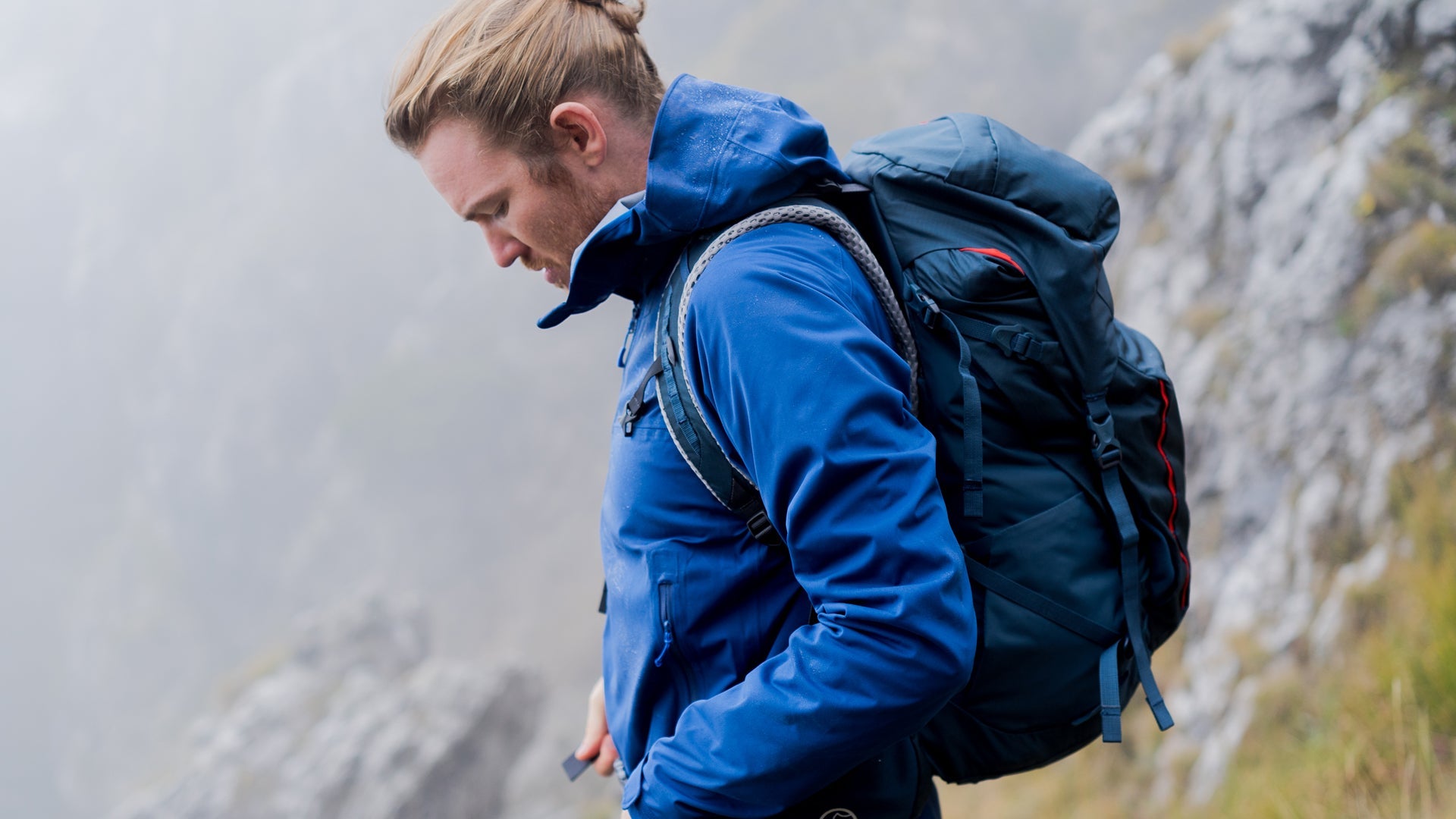
A well-designed hood is arguably the most important feature on a tramping rain jacket. Look for:
- Helmet-compatible volume (essential for alpine use, useful for wearing a hat underneath)
- Independent adjustment at the sides and back of the crown so you can tune the fit without the hood rotating when you turn your head
- A wire or structured peak brim to deflect rain from your face
- The ability to roll or stow the hood when not needed
Pockets
Chest pockets positioned above pack hipbelts are far more useful when carrying a pack than hip pockets that disappear under the belt. Waterproof zips or storm flaps over pocket openings prevent pooling in heavy rain.
Hem and Cuffs
An adjustable hem keeps drafts out. Velcro or elastic cuffs seal rain at the wrist. A longer back hem provides coverage when carrying a pack or crouching. These details add up when you're three days into a wet tramp.
Pit Zips
Underarm ventilation zips let you dump heat fast on steep climbs without removing the jacket. Not every jacket has them — lighter trail jackets often omit them to reduce weight — but for active tramping and alpine use they're genuinely useful.
Use Cases: Matching the Jacket to the Job
Day Walking
For casual day walks on formed tracks in milder conditions, a mid-range jacket with 15,000mm HH, critically taped seams, and reasonable breathability is sufficient. Weight and packability are a higher priority here — you want something that stuffs into its own pocket and lives in the bottom of a daypack.
Overnight and Multi-Day Tramping
This is where you need real performance: 20,000mm HH minimum, fully taped seams, a helmet-compatible adjustable hood, and high breathability. NZ's Great Walks and backcountry routes regularly deliver sustained rain at altitude. Don't cut corners on waterproofing for overnight trips.
Alpine and Technical Use
Alpine use demands the top tier: premium membranes, fully taped construction, a close-fitting helmet-compatible hood, articulated patterning for movement, and robust face fabric that resists abrasion from pack straps and rock. Weight matters here too — every gram counts at altitude.
Featured Jackets: Our Recommendations
Peak XV Tornado — Upgraded Performance Hardshell
The Peak XV Tornado is our upgraded hardshell — built for serious NZ tramping conditions with premium waterproof-breathable construction, a fully taped build, and a well-engineered hood system. High breathability figures keep you comfortable at tramping pace, and the technical fit handles everything from exposed ridgelines to heavy Fiordland rain. The Tornado is the jacket for trampers who spend significant time in NZ's backcountry and want a shell that won't let them down.
Peak XV Pinnacle — Solid Entry-Level Hardshell
The Peak XV Pinnacle delivers reliable waterproofing and wind resistance for day walks and moderate overnight trips at an accessible price point. With a packable design that won't bulk out your pack, it is the sensible starting point for trampers who are new to hardshell jackets or want a dependable backup shell for less demanding conditions.
Rab Kangri — Technical Alpine Shell
The Rab Kangri is a technical mountaineering jacket built for high-altitude alpine use. It features Rab's premium Gore-Tex or Pertex Shield membrane construction (depending on version), a helmet-compatible hood with precise adjustment, and a trim alpine fit designed for layering and movement on technical terrain. If you're heading into the Southern Alps for ski touring, mountaineering, or serious ridge scrambles, the Kangri is the jacket that belongs in your pack. It's also a strong choice for any tramper who wants a genuinely technical shell with proven pedigree.
Care and Maintenance: Making Your Investment Last
A good rain jacket is a long-term investment. With proper care, the membrane will continue performing at a high level for many seasons. A few habits make a significant difference:
- Wash regularly: Body oils, sunscreen, and dirt clog the membrane and strip DWR faster than almost anything else. Wash after every multi-day trip and more often in summer.
- Use technical wash: Specialist cleaners (Nikwax Tech Wash, Grangers Performance Wash) are pH-neutral and safe for membranes. Standard detergents and fabric softeners are not.
- Tumble dry on low: Heat is the most reliable way to reactivate DWR after washing. A 20-minute low heat cycle is often all that's needed.
- Store uncompressed: Don't stuff your jacket into a stuff sack for long-term storage. Hang it or fold it loosely to prevent membrane degradation at compression points.
- Reproof annually: Even well-maintained jackets benefit from a DWR treatment once a year or whenever water stops beading.
- Repair damage promptly: Small tears in the face fabric can undermine membrane performance. Repair patches for waterproof fabrics are inexpensive and easy to apply.
Layering Your Rain Jacket: The Full System
A rain jacket works best as part of a layered system, not as a standalone garment.
Base layer: Moisture-wicking fabric (merino wool or synthetic) that pulls sweat away from your skin. Cotton is not appropriate for tramping — it holds moisture and loses its insulating properties when wet.
Mid layer: Fleece, softshell, or insulated jacket for warmth. The mid layer traps body heat and buffers the temperature between your skin and the outer shell. Choose a mid layer with a slim enough profile to fit comfortably under your rain jacket.
Outer shell (rain jacket): Wind and rain barrier. Allows moisture vapour from your body to escape while keeping external wet out. Size your shell to fit over your mid layer without being so baggy it catches wind or restricts movement.
Pair your layering system with the right hiking pack and hiking boots for a complete wet-weather tramping setup.
Budget Guidance: What to Expect at Each Price Point
Rain jacket prices in NZ span a wide range, and the difference in real-world performance between price brackets is significant.
- Under $150: Budget shells with basic waterproofing, often with critically taped or untaped seams. Acceptable for occasional light rain, but will let you down in sustained downpours. Not recommended for overnight tramping.
- $150–$300: This is where the Peak XV Pinnacle sits. Reliable waterproofing and wind resistance, adequate breathability for active tramping. The right starting point for most NZ trampers.
- $300–$500: The Peak XV Tornado — upgraded performance, fully taped seams, higher breathability, and a more refined hood system. The sweet spot for serious tramping.
- $500+: Premium technical shells with top-tier membranes and refined construction. The Rab Kangri occupies this space. Worthwhile for frequent alpine use.
See the best rain jackets NZ 2026 roundup for detailed comparisons, or head straight to the rain jackets collection to see current stock and pricing.
Summary: What to Buy
If you're tramping in New Zealand — even occasionally — invest in a jacket with at least 20,000mm HH waterproofing, fully taped seams, and a quality adjustable hood. Start with the Peak XV Pinnacle if you're new to hardshell jackets or doing lighter tramping. Step up to the Peak XV Tornado — our upgraded hardshell — if you're regularly in exposed or alpine terrain and want higher breathability, a more refined hood, and a jacket built for sustained NZ backcountry conditions. Choose the Rab Kangri if you're heading into serious mountain environments and want a technical shell with no compromises.
Whatever you pick, maintain it properly — wash it, reproof it, and keep the DWR working — and it will be one of the most reliable pieces of kit in your pack.